
How Accurate Are Infidelity DNA Tests?
Quick Answer: How Accurate Are Infidelity DNA Tests?
Infidelity DNA tests can be highly reliable when sufficient biological material is present. Confirmatory testing methods, such as RSID semen detection and DNA profiling, are designed to accurately identify biological evidence and compare DNA profiles. However, results depend on factors such as sample quality, environmental exposure, and the presence of multiple contributors.
What Determines the Accuracy of Infidelity DNA Tests?
The accuracy of infidelity DNA testing depends on three main components:
the type of testing performed
the quality of the sample
how the results are interpreted
Understanding each of these helps explain how reliable the results may be.




Confirmatory vs Presumptive Testing
One of the most important factors in accuracy for bodily fluid testing is whether the test is presumptive or confirmatory.
Presumptive Tests
Presumptive tests are screening methods that suggest a biological fluid may be present. These tests are useful for identifying potential areas of interest but are not specific to a single biological substance.
Examples include:
PSA (prostate-specific antigen) tests
acid phosphatase (AP) tests
Confirmatory Tests
Confirmatory tests are designed to identify biological material with high specificity.
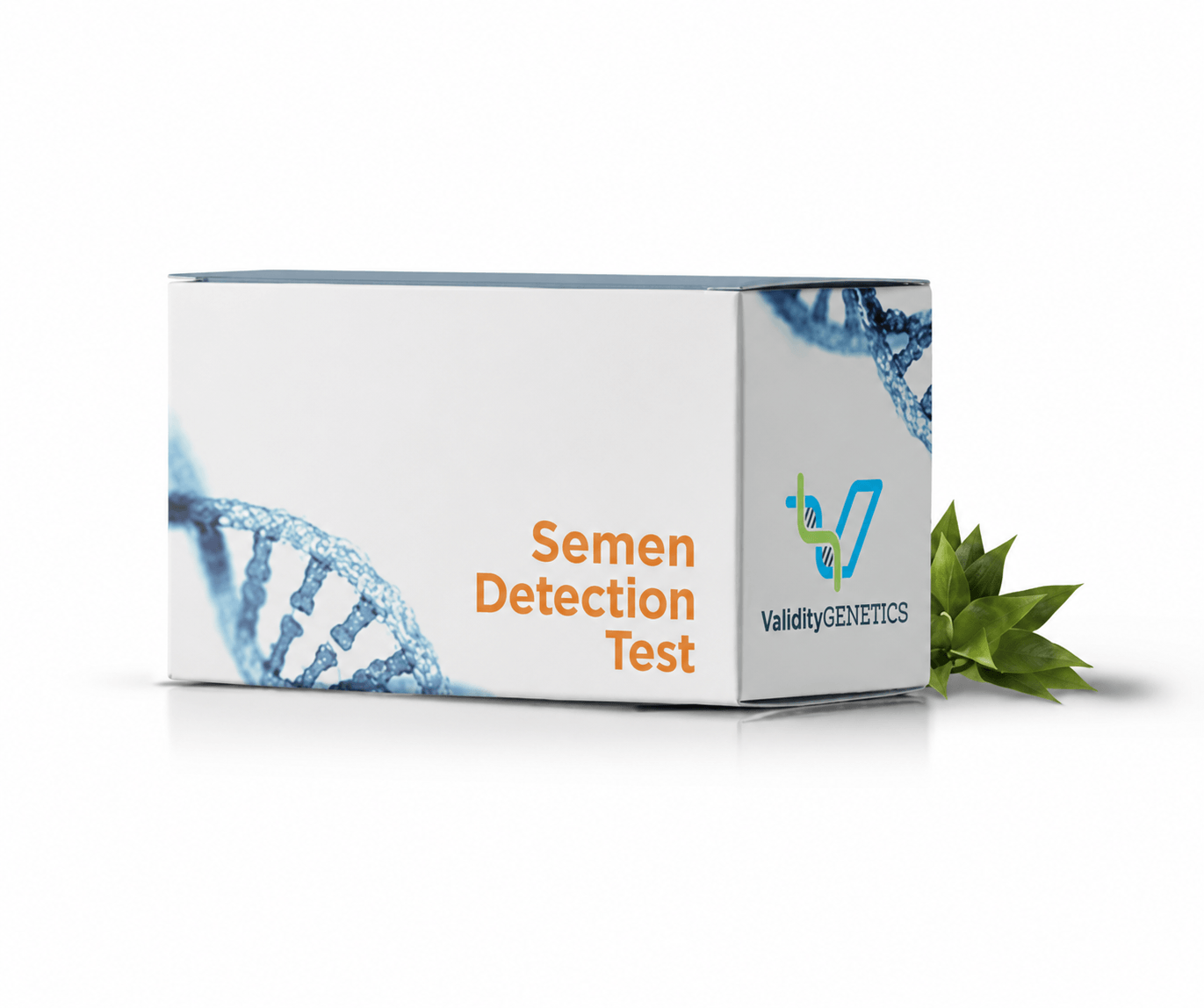
For example, the semen detection test used by Validity Genetics is a confirmatory RSID semen detection test that identifies the human-specific protein semenogelin.
Because semenogelin is specific to seminal fluid, detecting this protein provides strong scientific confirmation that semen may be present.
Learn more about semen detection testing here: Semen Detection.
Accuracy of DNA Comparison Testing
DNA comparison testing is another key component of infidelity testing.
When DNA is successfully extracted from a sample, laboratories can:
create a DNA profile
compare it to a known reference sample
determine whether the profiles match or are inconsistent
When a clear DNA profile is obtained, this type of testing is highly reliable for determining whether a known individual may be a contributor.
Learn more about how DNA comparison works here: How DNA Comparison Testing Works.
Factors That Can Affect Accuracy
Even with advanced testing methods, several real-world factors can influence results.
Sample Quality
Samples with limited or degraded DNA may not produce complete results.
Examples:
very small biological deposits
heavily degraded material
Environmental Exposure
DNA can degrade over time due to:
heat
moisture
sunlight
bacterial activity
Learn more about DNA transfer and persistence here: How DNA Gets on Clothing.
Washing and Cleaning
Washing can reduce the amount of biological material present, but it may not always remove all detectable evidence.
Mixed DNA Samples
Many real-world samples contain DNA from multiple individuals.
Reports may indicate:
“a mixed DNA profile from a Male and Female contributor”
These mixed samples can make interpretation more complex, but laboratories are trained to evaluate multiple contributors. Advanced tests such as as Differential Extraction may be an option in cases like this.
What Infidelity DNA Tests Can Show
Infidelity DNA testing can provide scientific information about:
whether biological material is present
whether semen may be detected
whether DNA profiles are present
whether a known individual can be included or excluded as a contributor
Understanding the Limitations
It’s important to understand that DNA testing provides scientific findings, not a narrative of events.
Results are based on:
the biological material present
the quality of the sample
the comparison performed
Context is important when interpreting any DNA result.
Understanding Infidelity DNA Test Accuracy
Infidelity DNA testing uses scientifically validated methods to detect biological material and analyze DNA profiles. When sufficient material is present and testing conditions are favorable, results can provide reliable and meaningful information.
Understanding how these tests work, along with the factors that influence accuracy, helps individuals interpret results and make informed decisions about testing options.
Cited References:
National Institute of Justice. DNA Evidence Basics
https://nij.ojp.gov/topics/articles/dna-evidence-basicsNational Institute of Standards and Technology (NIST). DNA Analysis Methods
https://www.nist.gov/topics/forensic-science/dna-analysisForensic Science International. DNA Transfer and Persistence Studies
https://www.sciencedirect.com/journal/forensic-science-international

Home Paternity DNA Test includes:
Easy to follow instructions
2 sterile buccal collection swabs per person
Sample envelopes for each person involved
Consent form
Prepaid return label to our laboratory. (USA Only)
Select from test options below: