
Saliva Detection
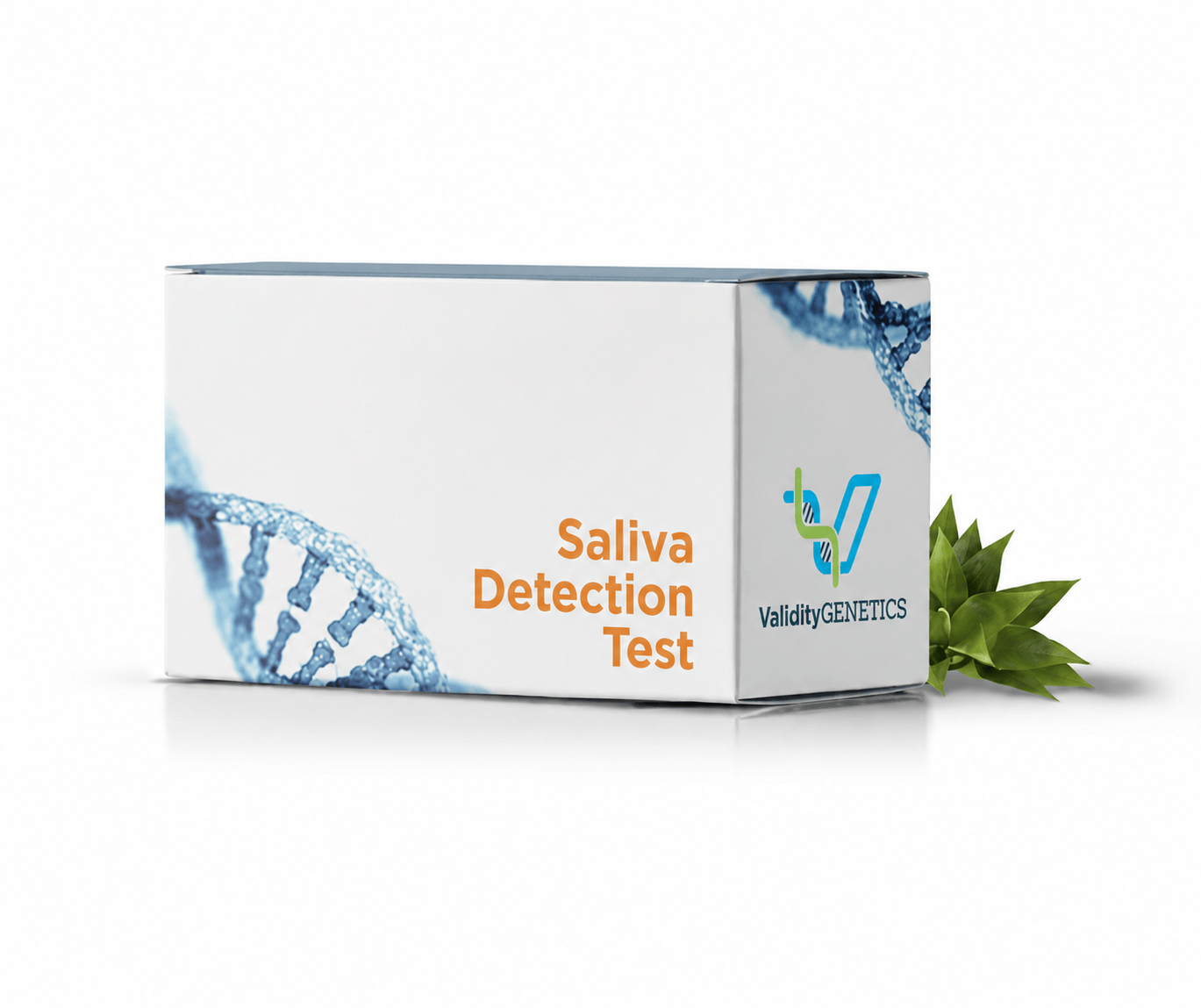
Saliva Testing - Private, Accurate, Confidential Results
Saliva Detection Testing
Do you suspect your spouse of cheating? Have you found suspicious items around the house that don’t belong to you or anyone in your family? An errant undergarment, extra toothbrush, stain on a shirt or bed sheets?
Infidelity can be difficult to prove, but if you need confirmation of evidence for yourself or others, forensic DNA testing is the best way to do so. Our advanced tests work for both male and females, so every philandering girlfriend, boyfriend, husband, or wife can be tested for.
If you need an accurate, fast, and private test for infidelity, this advanced DNA test is for you.
Please Note:
THIS IS NOT A PHYSICAL PRODUCT.
WE DO NOT SHIP ANYTHING TO YOU FOR THIS TEST.
YOU MUST SHIP YOUR ITEMS/SAMPLES TO OUR LABORATORY.
Please see out Infidelity Test Results Page for more detailed information on what to expect from a Semen Detection Infidelity test.
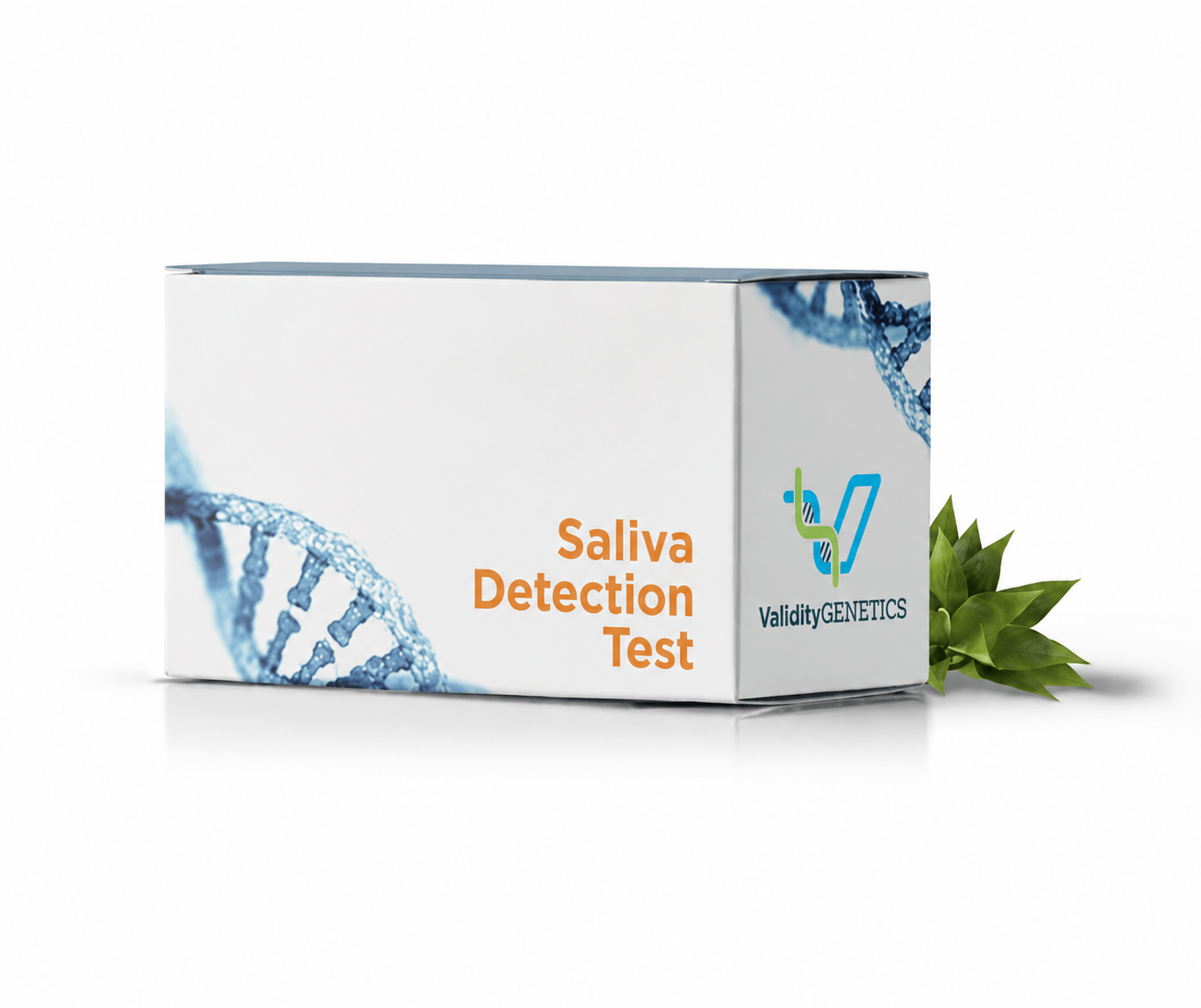
The Saliva Detection Test used by Validity Genetics is a test to detect saliva.
The Saliva Detection Test will have two possible results:
Negative: Saliva was not detected.
Positive: Saliva was detected.
Please Note: Saliva can be detected by our Semen Detection test, but continued testing may not provide DNA profiles as samples may not have DNA present in a high enough quantity to obtain a DNA profile. This can be for many different reasons.





What To Do After Ordering Your Test
After ordering you will be contacted by a Validity Genetics representative with additional instructions and the address to send your samples to. Simply follow the instructions to prepare and gather the your samples.
You will need to send the Special Sample(s) to our laboratory on your own. Depending on what the Special Sample is we recommend placing it inside a paper bag or envelope, please do not place inside a plastic zip-lock bag. On the outside of the bag/envelope please label the following:
the order number (this will be on your order confirmation),
a brief description of the item,
date of the collection,
approximate age of the sample.
For more information on gathering, packing, and labeling Special Samples Click Here
The Special Samples should all be placed inside a box or mailer envelope (plastic is fine) and sent to our laboratory. We highly recommend using a tracked shipping service.
The address to send the Special Sample to is:
Validity Genetics DNA
500 South Main Street
Las Cruces, NM 88001
Forensic or Special Samples in Infidelity Testing
What types of items can I use for sample collection?
The most common and helpful sources of a DNA test include things that can help prove a claim of adultery. These include samples like:
Used condom
Toothbrush
Feminine hygiene pads
Blood
Stained Sheets
Underwear and other clothing
Hair
This is not a complete list of sample sources.
Click here for more examples of samples used for DNA testing.
Other samples that might contain DNA include things like gum, dental floss, toothpicks, nail clippings, clothing, head coverings (like hats or bandanas), or any other items from which an expert can extract DNA. Contact us to make sure your sample can be used. An additional fee may be required based upon the type of sample submitted.
Click here for information on how to collect Forensic Samples for Infidelity DNA Tests.
Special note about old or degraded DNA samples
Is there an old article of clothing, hairs, or other object you swear aren't yours or your partners? Maybe you hid it somewhere and were planning to use it to confront them. Send it to us to test!
Ultraviolet light, extreme temperature and moisture are the primary destructive agents that lead to the degradation of DNA molecules. But, even if it has been a while since you found a suspicious object, degraded samples may still be useful. Because infidelity testing does not require a detailed profile workup, it’s possible that degraded samples can also be used to make infidelity determinations.
Have a question about a sample? Contact us!
Infidelity DNA Testing:
Frequently Asked Questions
-
Our Saliva Detection Test uses confirmatory RSID Saliva technology to detect alpha-amylase, an enzyme commonly found in human saliva.
This immunological testing method helps determine whether saliva is present on a submitted item or suspicious stain.
Unlike DNA profiling, saliva detection identifies biological material rather than the individual who deposited it. The test does not generate a DNA profile or identify a person.
-
Your laboratory report will indicate whether saliva was detected in the area of the submitted item that was tested.
Results are generally reported as Positive or Negative.
A positive result indicates that saliva-associated alpha-amylase was detected. A negative result means the test did not detect saliva-associated material in the area analyzed, although this does not necessarily prove that saliva was never present.
The test does not identify whose saliva is present. Additional DNA extraction and comparison testing may be needed to investigate the source.
-
Our laboratory can examine many items that may contain saliva, including:
Clothing and fabrics with suspicious stains
Pillowcases, bedding, and towels
Drinking straws, cups, and bottles
Cigarette butts
Envelopes and other personal items
Other objects suspected of containing saliva
For best results, avoid washing, cleaning, or unnecessarily handling the item before testing.
Allow damp items to air-dry completely and package each sample separately in a clean paper envelope or bag.
The ability to detect saliva depends on the amount and condition of the biological material present.
-
Saliva-associated biological material may sometimes remain detectable after washing or cleaning, but these processes can significantly reduce the amount available for testing.
Detection depends on the type of material, cleaning method, detergents used, and the amount of saliva originally deposited.
A negative result on a washed or cleaned item does not necessarily mean saliva was never present.
For the best chance of detection, submit items before washing or cleaning whenever possible.
-
No. Saliva detection determines whether saliva-associated material is present but does not identify the individual who deposited it.
If you want to determine whether DNA found on an item is consistent with your DNA, your partner's DNA, or another known person's DNA, additional DNA extraction and comparison testing may be appropriate.
Our Advanced Infidelity DNA Testing options can help evaluate recoverable human DNA and compare suitable DNA profiles against known reference samples.
-
Saliva detection and DNA testing answer different questions.
Saliva Detection Testing looks for alpha-amylase associated with saliva. It helps determine whether saliva may be present but does not provide a DNA profile.
DNA Extraction and Profiling analyzes recoverable human DNA, which may originate from saliva, skin cells, blood, semen, or other biological material.
DNA comparison, such as our Advanced Infidelity Test, can then evaluate suitable profiles against reference samples from known individuals.
If you need both saliva detection and DNA comparison, contact Validity Genetics to discuss the available testing options.
-
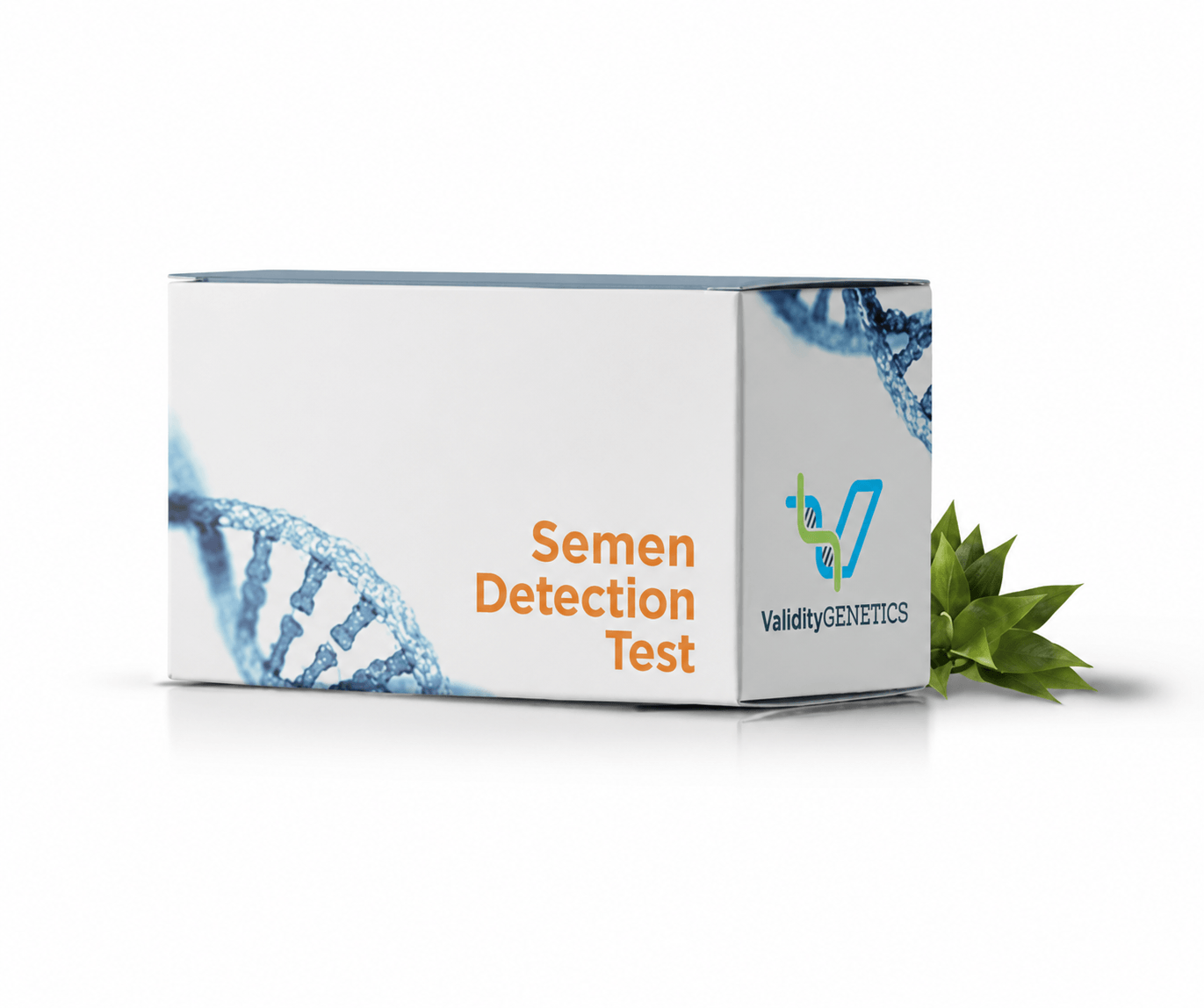
Yes. In addition to saliva detection, Validity Genetics offers specialized testing for semen and human blood.
Our Semen Detection Test uses confirmatory RSID technology to detect semenogelin, a protein associated with human semen.
Our Blood Detection Test uses specialized laboratory methods to determine whether human blood is present on a submitted item or stain.
These tests help identify specific biological materials but do not establish who deposited them. DNA extraction and comparison testing may be added when appropriate.
Explore our Infidelity DNA Testing services or contact us for assistance choosing the right test.
-
Standard results are generally available within 5–7 business days after our laboratory receives your sample.
Our laboratory uses RSID Saliva, a confirmatory immunological method designed to detect saliva-associated alpha-amylase. However, test performance depends on the quantity and condition of the sample, potential interfering substances, and whether sufficient biological material is present.
Results are delivered confidentially by email in PDF format.