
What Do Infidelity DNA Test Results Look Like?

Quick Answer: What Do Infidelity DNA Test Results Show?
Infidelity DNA test results typically show whether biological material such as semen is detected, whether DNA profiles are present, and whether those DNA profiles match or exclude known individuals. Results may also indicate if multiple contributors are present in a sample.
What Is Included in an Infidelity DNA Test Report?
Infidelity DNA test reports are structured to clearly present:
the items submitted for testing
the type of testing performed
the findings for each item
DNA profile results
interpretation of those results
Reports often include both a written summary and a detailed DNA profile table.
Example: Report Overview Section
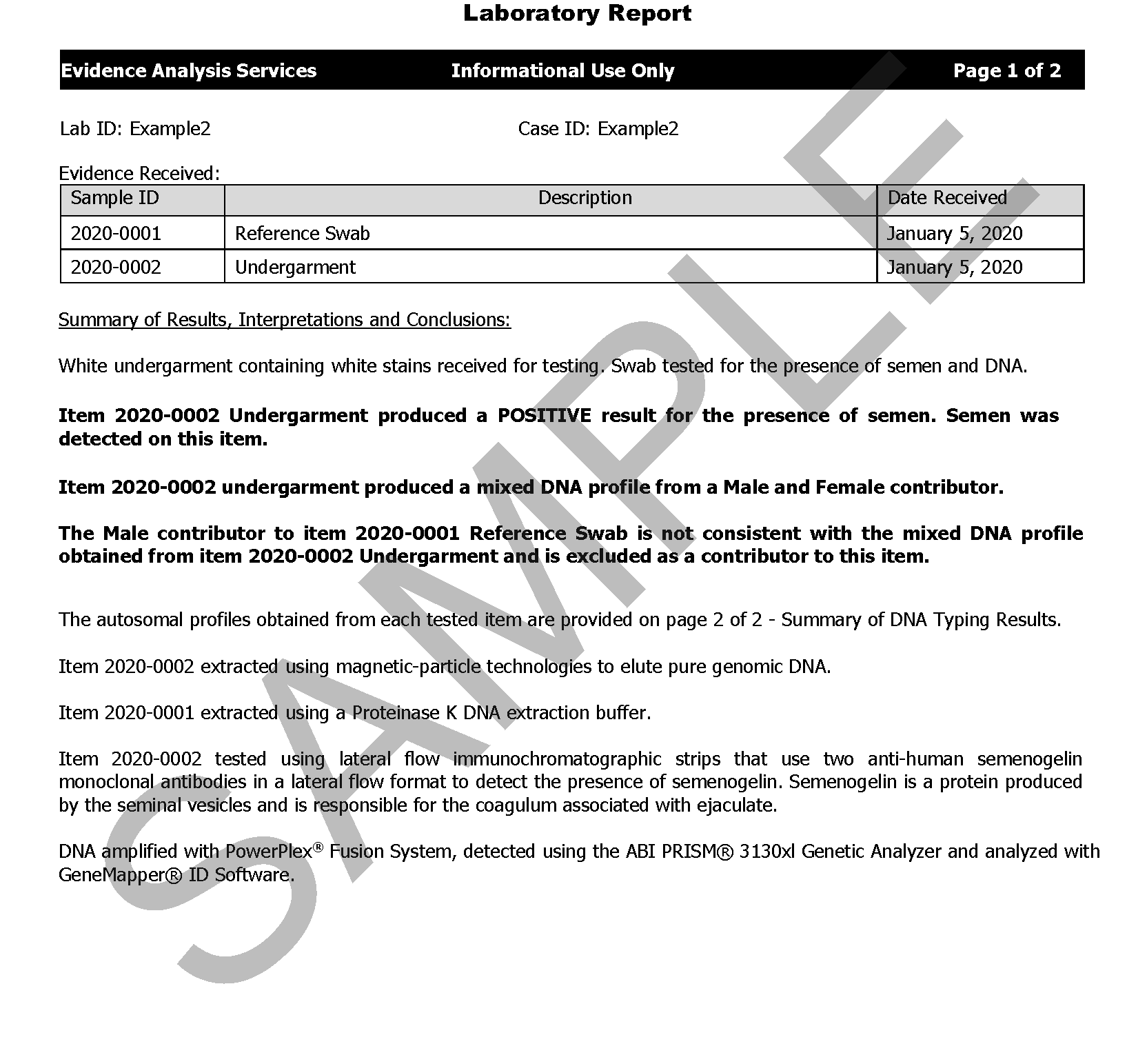
At the beginning of the report, you will typically see:
Lab ID and Case ID
Evidence Received, such as:
reference swab
clothing or undergarments
Descriptions of each item tested
This section confirms what was tested and when it was received.
Understanding the Summary of Results
The most important section of the report is:
“Summary of Results, Interpretations and Conclusions”
This section explains the findings in plain language.
Example: Positive Semen Detection
From your report:
“Item 2020-0002 Undergarment produced a POSITIVE result for the presence of semen. Semen was detected on this item.”
This means:
A confirmatory test detected semen-specific markers
The result is not presumptive, it is confirmed
This is a key finding in tests like: Complete Infidelity DNA Test
Understanding DNA Profile Results
Reports often include statements such as:
“Item produced a mixed DNA profile from a Male and Female contributor.”
This means:
DNA from more than one person is present
The laboratory identified multiple contributors
What Is a Mixed DNA Profile?
A mixed DNA profile occurs when:
biological material from multiple individuals is present on the same item
DNA from those individuals is detected together
This is common in real-world samples.
Understanding Inclusion and Exclusion
One of the most important parts of the report is whether a known individual is included or excluded.
Example: Exclusion Statement
From your report:
“The Male contributor to the Reference Swab is not consistent with the mixed DNA profile obtained from the undergarment and is excluded as a contributor to this item.”
This means:
The reference individual’s DNA does not match the DNA found on the item
That individual is excluded as a contributor
Example: Inclusion Language
In other reports, you may see language such as:
“Cannot be excluded as a contributor”
This means:
The DNA is consistent with that individual
The person may be a contributor







Example: Multiple Item Testing
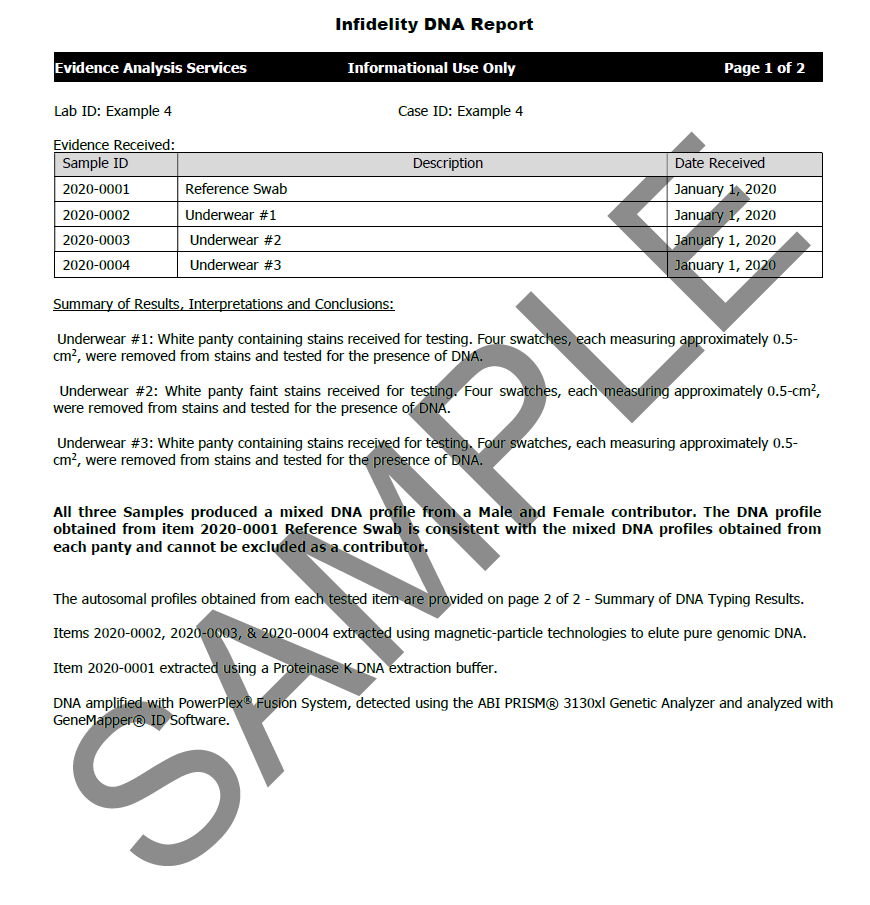
In more complex reports, multiple items may be tested, such as:
Underwear #1
Underwear #2
Underwear #3
You may see statements like:
“All three samples produced a mixed DNA profile from a Male and Female contributor.”
and:
“The DNA profile obtained from the reference swab is consistent with the mixed DNA profiles obtained from each item and cannot be excluded as a contributor.”
This means:
The same individual’s DNA may be present across multiple items
The results are consistent across samples
Understanding the DNA Profile Table
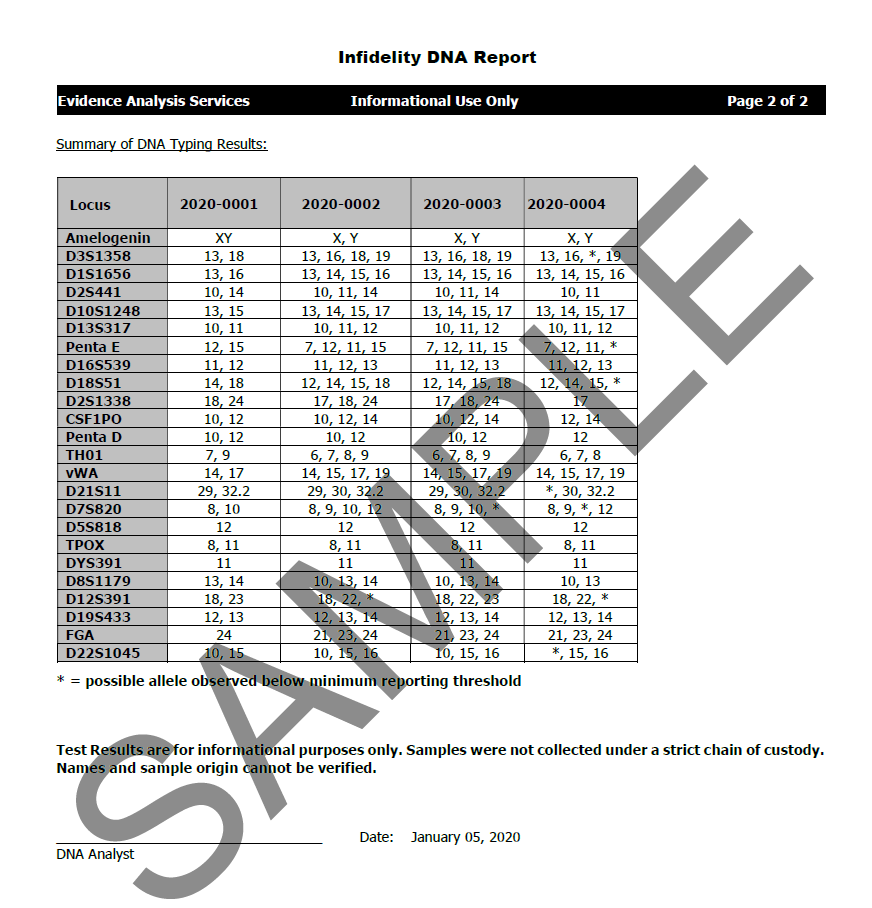
The second part of the report contains a DNA typing table.
This includes:
genetic markers (loci)
allele values for each sample
comparisons between items
This section is used by scientists to:
confirm matches
identify contributors
support conclusions in the summary
For most readers, the summary section is the most important, while the table provides supporting data.
What “Informational Use Only” Means
Your reports include language such as:
“Test Results are for informational purposes only. Samples were not collected under a strict chain of custody.”
This means:
The test is not intended for legal use
The identity of the sample provider cannot be independently verified
Results are for personal knowledge
How to Interpret Infidelity DNA Test Results
When reviewing results, focus on three key findings:
1. Was a biological fluid detected?
Example: semen detected
2. Was DNA found?
DNA profiles may be present or absent
3. Do the DNA profiles match or exclude a reference sample?
included (cannot be excluded) - This is a match to the compared DNA.
excluded - This is no match to the compared DNA.
These three elements together provide the most meaningful interpretation.
Understanding Your Results
Infidelity DNA testing provides scientific information about biological material found on personal items. Reports may identify the presence of biological fluids, detect DNA profiles, and compare those profiles to known individuals.
Understanding how to read these reports helps individuals interpret findings and determine what the results may indicate in their specific situation.
