

Twin DNA Testing: Identical vs Fraternal Twins Explained
Are twins always genetically identical? Learn the difference between identical and fraternal twins and how DNA testing can determine twin zygosity.

Avuncular DNA Testing: How Aunt and Uncle DNA Tests Work
Can an aunt or uncle DNA test help determine if a child is related to a family? Learn how avuncular DNA testing works and when it may help answer relationship questions.

Grandparent DNA Test: How It Works and When It’s Used
Can a grandparent DNA test determine if a child is related to a family? Learn how grandparent DNA testing works and when it may help answer questions about biological relationships.

Sibling DNA Test vs Paternity Test: What’s the Difference?
Not sure whether you need a sibling DNA test or a paternity test? Learn the key differences between these tests and when each option is used to determine biological relationships.

Can a DNA Test Be Done Without the Father?
What happens if the alleged father is unavailable for DNA testing? In many cases, alternative DNA testing options such as sibling or grandparent testing may help determine biological relationships.
The 7 Most Common Questions About Paternity DNA Testing
Thinking about a paternity DNA test? Here are answers to the most common questions people ask about paternity testing, including how accurate the tests are and how the results are interpreted.

How Accurate Are Paternity DNA Tests?
How accurate are paternity DNA tests? Modern DNA testing analyzes multiple genetic markers to determine biological fatherhood with extremely high accuracy. Learn how the science behind paternity testing works.
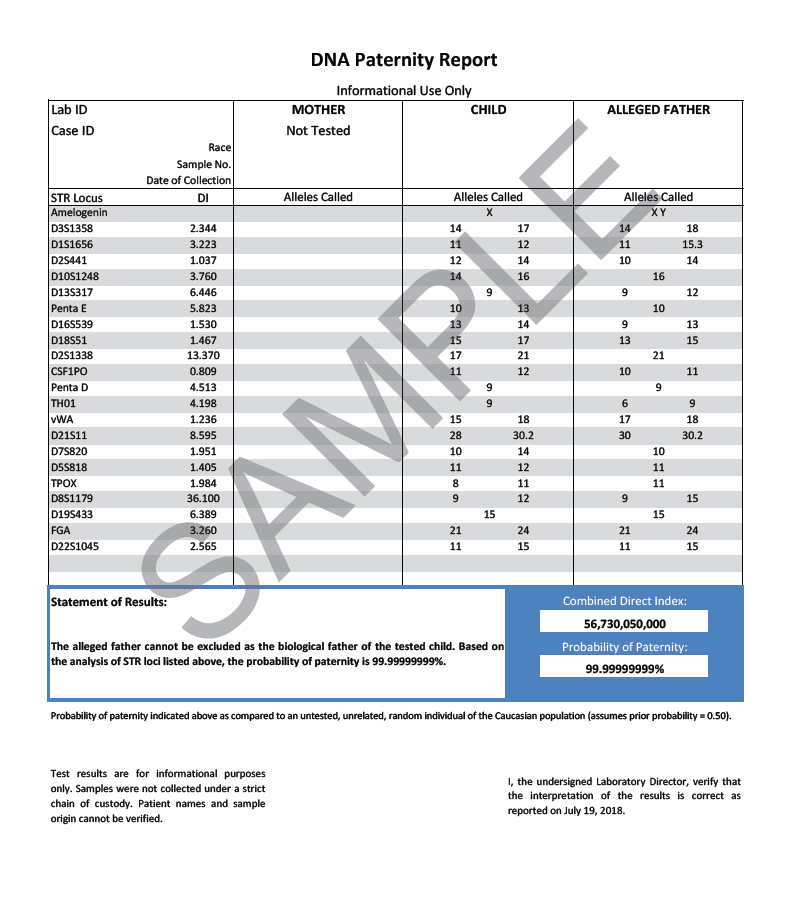
How to Read Paternity DNA Test Results
DNA test results can look complicated at first glance. Learn how to read paternity DNA test results, including what the combined paternity index and probability of paternity actually mean.

Paternity DNA Testing Explained: How Paternity Tests Work
How does a paternity DNA test work? Learn how DNA is used to determine biological fatherhood, how accurate the results are, and what the testing process looks like.

Bodily Fluid Detection Testing Explained: How Biological Evidence Is Identified
Biological evidence can sometimes remain on clothing, bedding, or other personal items. Bodily fluid detection testing can help identify substances such as semen, saliva, blood, and urine. Learn how these tests work and when they may be used.