A Step-by-Step Guide to Collecting DNA Samples
Collecting DNA samples at home is easier than you might think. Most paternity and relationship DNA tests require only a simple cheek swab, making the process quick, painless, and convenient.
However, proper DNA sample collection is important for obtaining reliable results. Following the collection instructions, preventing contamination, and packaging samples correctly can help avoid unnecessary delays or the need to collect new samples.
At Validity Genetics, we provide at-home DNA testing kits for paternity and biological relationship testing, allowing individuals and families to collect their samples privately and return them to our laboratory for analysis.
This guide explains how to collect DNA samples at home, prepare your testing kit, and avoid common collection mistakes.
1. Understand What an At-Home DNA Test Is
An at-home DNA test, also called an informational DNA test, allows individuals to collect their own DNA samples without visiting a laboratory or collection facility.
Most at-home relationship DNA tests use a buccal swab, commonly called a cheek swab, to collect cells from the inside of the mouth.
These cells contain the DNA needed to evaluate biological relationships.
At-home DNA testing is commonly used for:
Paternity DNA Testing: Determines whether a man is the biological father of a child.
Sibling DNA Testing: Evaluates whether individuals share one or both biological parents.
Grandparent DNA Testing: Investigates biological relationships between grandparents and grandchildren.
Aunt and Uncle DNA Testing: Evaluates the biological relationship between an alleged aunt or uncle and a niece or nephew.
Paternal Lineage (Y-STR) DNA Testing: Examines Y-chromosome markers to investigate shared paternal ancestry.
Twin Zygosity DNA Testing: Determines whether twins are identical or fraternal.
At-Home DNA Testing vs. Legal DNA Testing
Before collecting your samples, make sure you've purchased the correct type of test.
At-home DNA testing is intended for personal knowledge and peace of mind. Because samples are collected privately without independent identity verification, the results are not intended for legal use.
If you need results for child support, custody, birth certificate changes, inheritance, or other legal matters, you may need a Legal DNA Test.
Legal DNA testing requires verified identities, authorized sample collection, and documented chain-of-custody procedures.
If you're unsure whether you need an at-home or legal DNA test, contact Validity Genetics before collecting your samples.
2. Prepare Your At-Home DNA Testing Kit
Before beginning, open your collection kit and review the instructions provided.
A typical Validity Genetics home DNA testing kit includes:
Sterile oral cheek swabs for each participant
Collection envelopes or designated sample packaging
Sample collection instructions
Required paperwork or consent documentation
Instructions for returning the samples to the laboratory
Make sure you have the correct collection materials for everyone participating in the test.
If participants live at different addresses, Validity Genetics offers a Split Kit option for eligible at-home relationship tests. This allows collection materials to be sent to separate locations.
Choose a clean, dry area where you can comfortably collect and organize the samples.
3. Prepare Before Collecting a Cheek Swab
A few simple precautions can help prevent contamination and ensure that the laboratory receives a suitable DNA sample.
Avoid Eating or Drinking Before Collection
For best results, participants should avoid eating, drinking anything other than water, smoking, chewing gum, or using oral products for at least 30 minutes before collecting a cheek swab, unless the kit instructions specify a different waiting period.
This helps reduce the presence of food particles and other substances that could interfere with sample collection.
Wash Your Hands
Wash and dry your hands before handling the collection materials.
Clean disposable gloves may also be used, particularly when collecting samples from another person.
Avoid Touching the Swab Tip
The collection end of the swab should only touch the inside of the participant's mouth.
Do not touch the swab tip with your fingers, place it on a countertop, or allow it to come into contact with another person's belongings.
Keep Each Participant's Materials Separate
When collecting samples from multiple individuals, complete one participant's collection at a time.
This helps prevent accidental mixing or mislabeling of samples.
4. How to Collect a DNA Sample Using a Cheek Swab
Collecting a cheek swab is generally quick and painless.
Follow the specific instructions included with your Validity Genetics collection kit, as the number of swabs and collection time may vary.
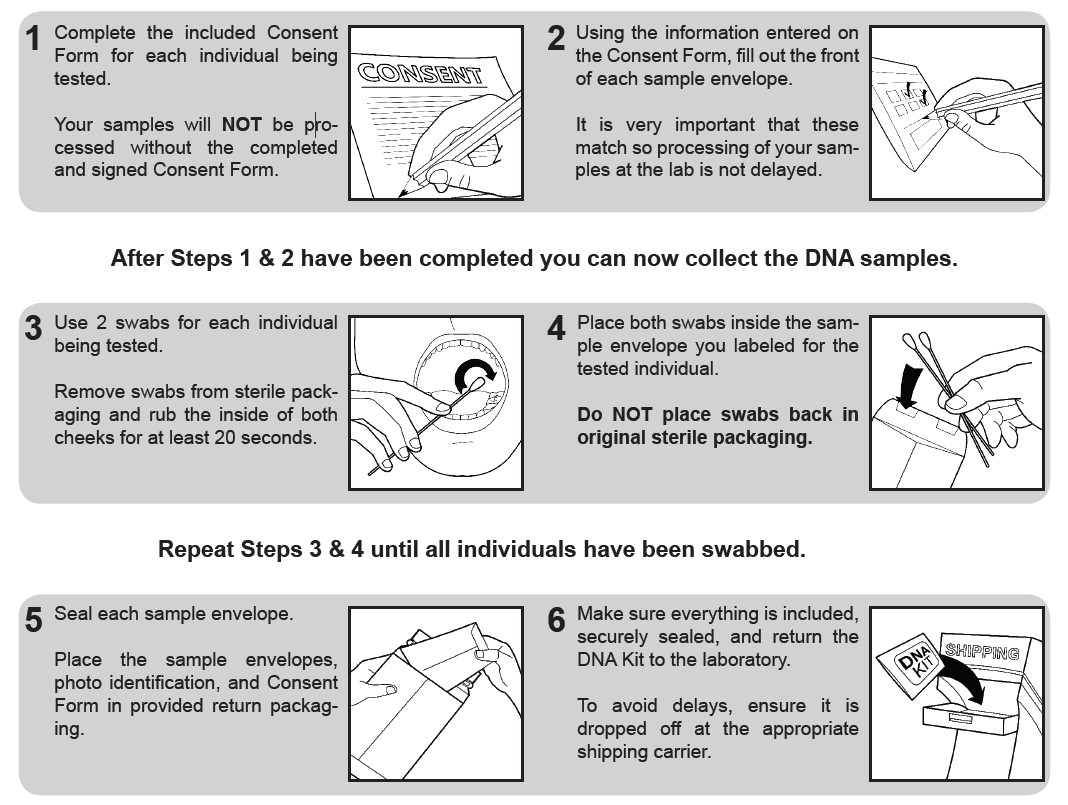
How to properly collect a cheek swab DNA sample using your Validity Genetics home DNA testing kit.
Step 1: Open the Swab Packaging
Carefully remove one sterile swab from its packaging.
Hold the swab by its handle and avoid touching the collection tip.
Step 2: Place the Swab Inside the Mouth
Insert the swab into the participant's mouth and position it against the inside of one cheek.
Step 3: Rub the Inside of the Cheek
Firmly but gently rub and rotate the swab against the inside of the cheek for approximately 30–60 seconds, or for the time specified in your kit instructions.
The goal is to collect cells from the cheek lining, not simply saliva.
Avoid scraping hard enough to cause pain or bleeding.
Step 4: Repeat With the Required Swabs
If your kit includes multiple swabs for each participant, repeat the collection process using the additional swabs.
Follow the instructions regarding which cheek to use and how many swabs are required.
Step 5: Allow the Swabs to Air Dry
After collection, allow the swabs to air dry completely as directed by your kit instructions.
Avoid touching the swab tips or placing them on contaminated surfaces.
Do not use a hair dryer, heater, or other heat source to speed up the drying process.
Step 6: Package and Label the Samples
Place the dried swabs into the designated collection envelopes.
Make sure each participant's samples are placed in the correct envelope and that all required information is completed.
Never place samples from different participants into the same collection envelope unless your kit specifically instructs you to do so.
Repeat the process for each person participating in the test.
5. Common DNA Sample Collection Mistakes to Avoid
Most at-home DNA collections are completed without difficulty. However, certain mistakes can cause delays or require samples to be recollected.
Here are some common problems to avoid:
Touching the swab tip: Contact with fingers or other surfaces can introduce unwanted DNA.
Mixing up participants' samples: Incorrect labeling can prevent the laboratory from confidently associating samples with the correct individuals.
Not collecting enough cheek cells: Simply placing the swab in the mouth or lightly touching the cheek may not collect enough material.
Packaging wet swabs: Excess moisture can encourage microbial growth and contribute to sample degradation.
Using the wrong packaging: Follow the instructions provided with your kit rather than substituting plastic bags or unrelated containers.
Leaving paperwork incomplete: Missing information or required consent documentation may delay laboratory processing.
Taking a few extra minutes to review your materials before shipping can help prevent these issues.
6. How to Collect DNA Samples From Babies and Young Children
DNA testing can be performed on individuals of any age, including newborns and infants.
The collection process is similar to that used for adults, although additional care is needed when collecting samples from young children.
For infants, wait until the recommended period after feeding before collecting the sample.
Gently rub the swab against the inside of the baby's cheek, following the instructions supplied with your kit.
Avoid touching the swab tip with your fingers or allowing it to contact other surfaces.
A parent or responsible adult should supervise the collection process.
Cheek swab collection is noninvasive and generally well tolerated by babies and young children.
7. What If You Cannot Collect a Standard Cheek Swab?
Sometimes a person cannot provide a conventional cheek swab.
For example, the individual may be deceased, unavailable, or unwilling to participate in testing.
In these situations, forensic relationship DNA testing may provide an alternative.
Forensic DNA testing attempts to recover DNA from non-standard samples, including:
Used toothbrushes
Hair with attached roots
Used tissues
Chewing gum
Cigarette butts
Dried bloodstains
Other personal items containing biological material
Unlike a standard cheek swab, these samples may contain limited, degraded, or mixed DNA. Specialized laboratory processing is generally required, and successful DNA recovery cannot be guaranteed.
Validity Genetics offers several Forensic Relationship DNA Testing services, including forensic paternity, sibling, grandparent, and avuncular testing.
For more information, read our guide to Common Types of DNA Samples.
What About Infidelity DNA Testing?
Infidelity DNA testing is different from standard relationship testing because it often involves clothing, bedding, underwear, tissues, or other items that may contain biological material.
Depending on your goals, testing may involve semen detection, saliva detection, DNA extraction, or comparison against a known reference sample.
These samples require different collection and packaging procedures than standard cheek swabs.
Learn more about Infidelity DNA Testing and How to Collect Special DNA Samples.
8. How to Package and Return Your DNA Samples
Once all participants have completed their collections, review the kit instructions and make sure everything is ready for shipping.
Before sealing your return package:
Confirm that all required cheek swabs have been collected.
Make sure the swabs are completely dry.
Check that each participant's samples are correctly labeled.
Complete any required paperwork or consent forms.
Place the samples and documentation into the return packaging.
Follow the shipping instructions provided with your order.
Samples should be protected from excessive heat, moisture, and direct sunlight.
If you are using your own shipping label, confirm the current laboratory receiving address and any specific packaging instructions before mailing.
For Validity Genetics, the laboratory receiving address is:
Validity Genetics Services
500 S Main St
Las Cruces, NM 88001
We recommend using a shipping service that provides tracking so you can monitor your package's delivery.
9. What Happens After the Laboratory Receives Your Samples?
After your samples arrive at the laboratory, they are checked in and prepared for testing.
During laboratory analysis, DNA is extracted from the collected cells and examined using genetic markers relevant to the requested relationship test.
The results are then reviewed and compiled into a report.
How Long Does At-Home DNA Testing Take?
Most standard paternity and relationship DNA tests are completed within 2–3 business days after all required samples have been received and checked in.
Forensic relationship and infidelity DNA testing generally require 5–7 business days after laboratory receipt and check-in.
Business days are Monday through Friday, excluding weekends and holidays.
Shipping time and delays caused by missing samples or incomplete information are not included in these processing estimates.
Completed results are delivered electronically as a PDF document to the purchaser's email address.
Frequently Asked Questions About Collecting DNA Samples at Home
Is collecting a DNA cheek swab painful?
No. Cheek swab collection is noninvasive and generally painless. The swab is gently rubbed against the inside of the cheek to collect cells containing DNA.
How long should I swab my cheek for a DNA test?
Most cheek swab collections involve rubbing and rotating the swab against the inside of the cheek for approximately 30–60 seconds. Always follow the specific instructions supplied with your DNA testing kit.
Can I eat or drink before collecting a DNA sample?
As a general precaution, avoid eating, drinking anything other than water, smoking, or chewing gum for at least 30 minutes before collection, unless your kit specifies otherwise.
Can I collect DNA samples from multiple people at home?
Yes. At-home relationship DNA tests are designed to allow participating individuals to collect their own samples.
Each participant should use their designated collection materials, and samples must be kept separate and correctly labeled.
What if someone lives in another state?
Participants do not need to live at the same address to complete an eligible at-home relationship DNA test.
Validity Genetics offers a Split Kit option that allows collection materials to be shipped to separate addresses for an additional fee.
What happens if I accidentally touch the swab tip?
If the swab tip touches your fingers or another surface, it may become contaminated.
We recommend contacting Validity Genetics for guidance before submitting the sample. A replacement swab may be needed.
Can I use a toothbrush instead of a cheek swab?
Possibly. A toothbrush may contain recoverable DNA and can be considered for forensic relationship testing.
However, toothbrushes and other non-standard samples require specialized analysis and are not interchangeable with standard cheek swabs.
Are at-home DNA test results accurate?
When samples are collected correctly and contain sufficient DNA, at-home relationship tests can provide reliable genetic results.
The laboratory analysis may use the same genetic markers as legal relationship testing. The primary distinction is that at-home collection does not include independent identity verification or a documented legal chain of custody.
Ready to Collect Your DNA Samples?
Collecting DNA samples at home is a simple process when you have the correct materials and follow the instructions carefully.
For most paternity and relationship DNA tests, a cheek swab provides a convenient and reliable way to collect the DNA needed for laboratory analysis.
At Validity Genetics, we offer at-home paternity and relationship DNA testing, as well as specialized forensic and infidelity testing for situations involving non-standard samples.
If you're unsure how to collect a sample, need help selecting the appropriate test, or have questions about your collection kit, contact Validity Genetics.
Our team can help you understand your testing options and guide you through the collection process.
